Why AR for Education?
What can augmented reality improve in a learning experience?
Some ideas are difficult to understand because they are too small, hidden inside an object, dangerous to practise or simply unavailable in the room. AR can make those ideas visible at a useful scale and connect information to an action.
The aim is not to replace teachers, books or real-world practice. It is to give learners another way to inspect, test and remember a concept when a flat diagram or written explanation is not enough.
Grasp difficult concepts
Reveal atoms, anatomy and mechanisms as spatial content learners can view from more than one angle.
Expand access
Bring specialist objects and learning environments into places where the physical version is unavailable.
Increase participation
Use challenges, discovery and purposeful interaction to turn information into something learners actively apply.
What AR Makes Possible
Practical uses of AR in education
Visualising abstract concepts with AR learning cards
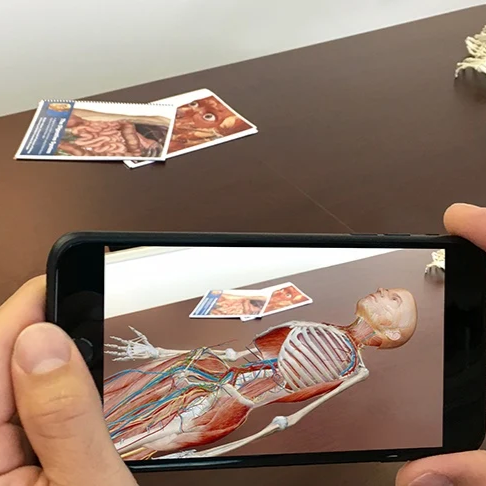
Printed learning cards can trigger three-dimensional content on a phone or tablet. Instead of asking a learner to imagine what happens when two atoms bond or how parts of a system relate, the experience can show the process directly above the material.
Because the card remains a physical reference, learners can arrange, compare and revisit concepts while the digital layer supplies motion, scale and depth that a static textbook image cannot provide.
Learning cards that reveal three-dimensional concepts
This demonstration shows how printed cards can become physical anchors for educational AR content that learners inspect from different angles.
Bringing life-size anatomy into the room
A realistic human skeleton is difficult to place in every classroom, home or training space. An AR experience can position a life-size model in the learner's room, making its scale and relationship to the surrounding space immediately understandable.
In Virtical's anatomy concept, several bones are missing when the model appears. Learners must inspect the skeleton, read about the relevant anatomy and identify what is absent before they can complete it.
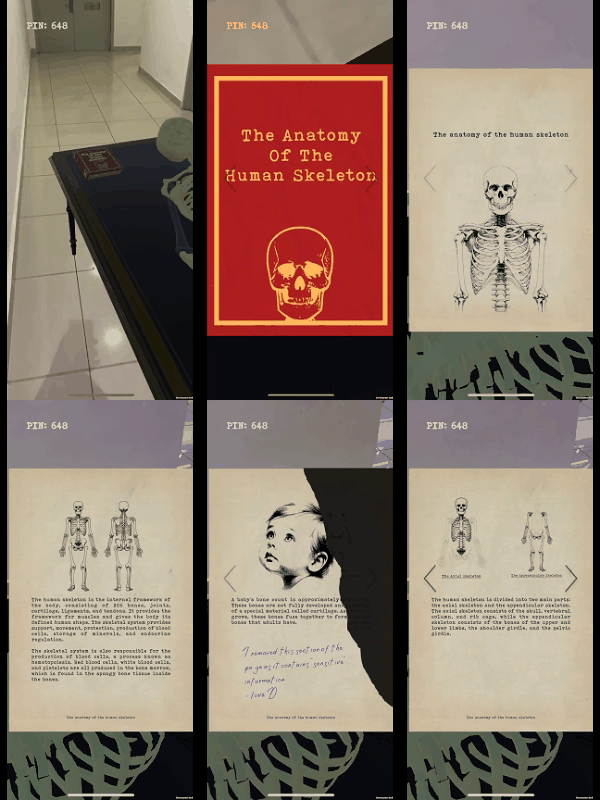
Turning knowledge into a repeatable challenge
To recover the missing bones, learners answer questions and use the resulting codes to unlock each piece. The missing parts can change from one session to another, encouraging the learner to read and reason again instead of memorising one fixed answer.
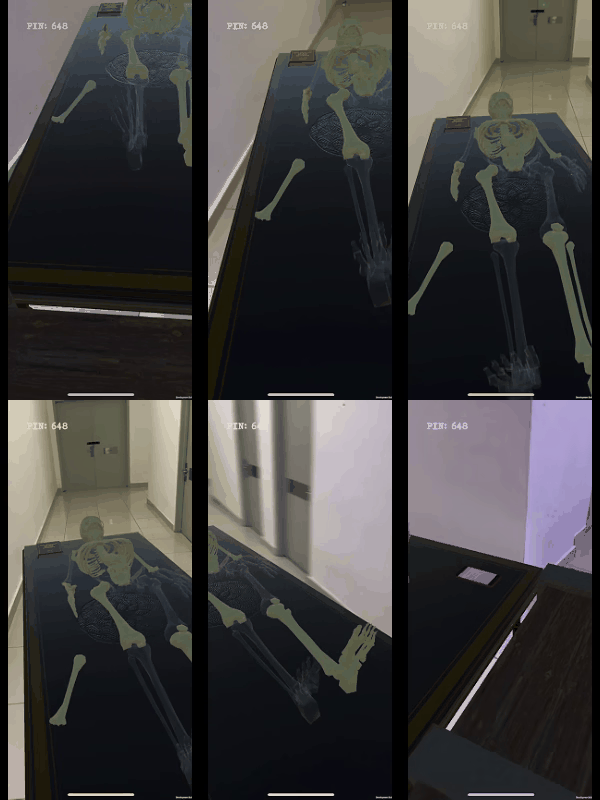
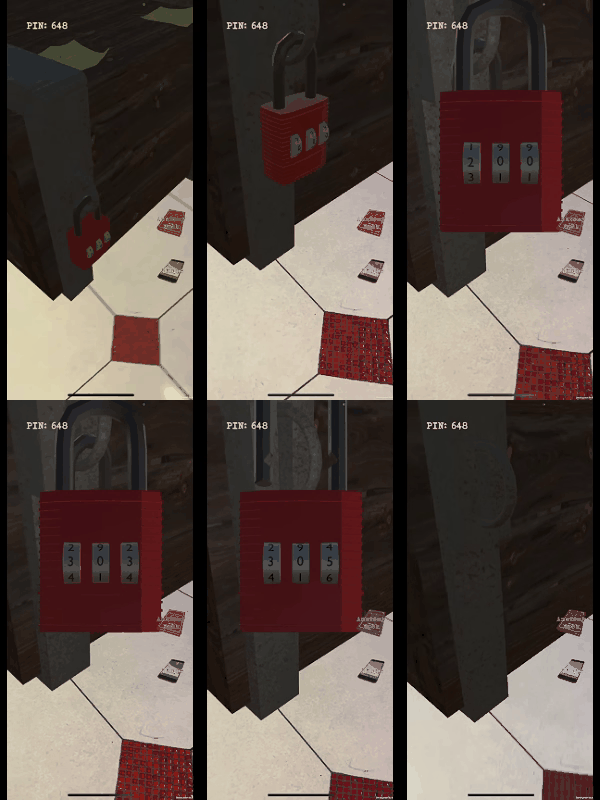
This combination of spatial visualisation and game structure gives the information a purpose. The learner is not completing a quiz in isolation; each correct answer changes the object in front of them.
Simulating hands-on learning safely
Some practical experiences are expensive, dangerous or difficult to provide repeatedly. AR can guide a trainee through equipment procedures, help a beginner understand the sequence of operating a machine, or simulate an activity before the learner works with the real object.
The same approach can support younger learners. In one Virtical concept, children place virtual seedlings around an indoor space, collect water and use a natural lowering gesture to water each plant. The interaction connects a digital outcome to a physical movement rather than reducing the activity to a screen tap.
Showing processes that normally take time
Plant growth is meaningful partly because it requires care and patience, but a classroom cannot always wait through an entire growing cycle. The simulation preserves watering and return visits while compressing several weeks of growth into approximately 24 hours.
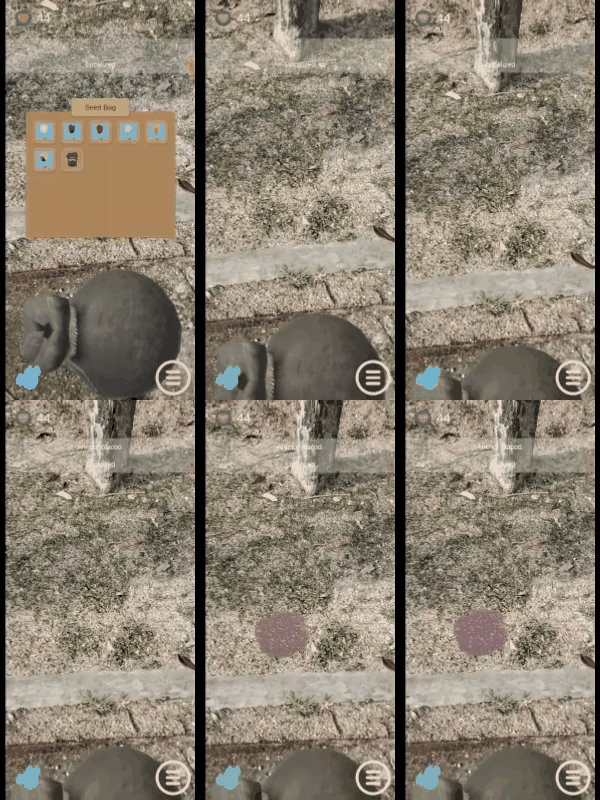
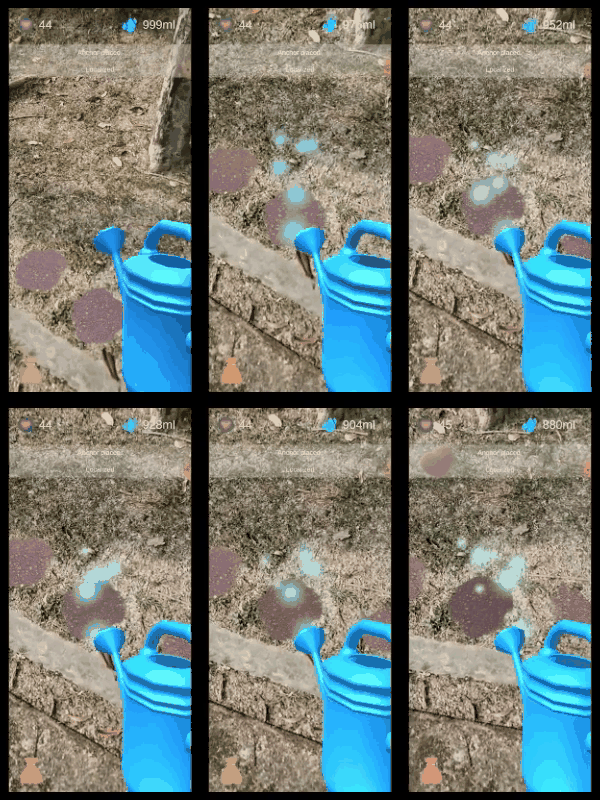
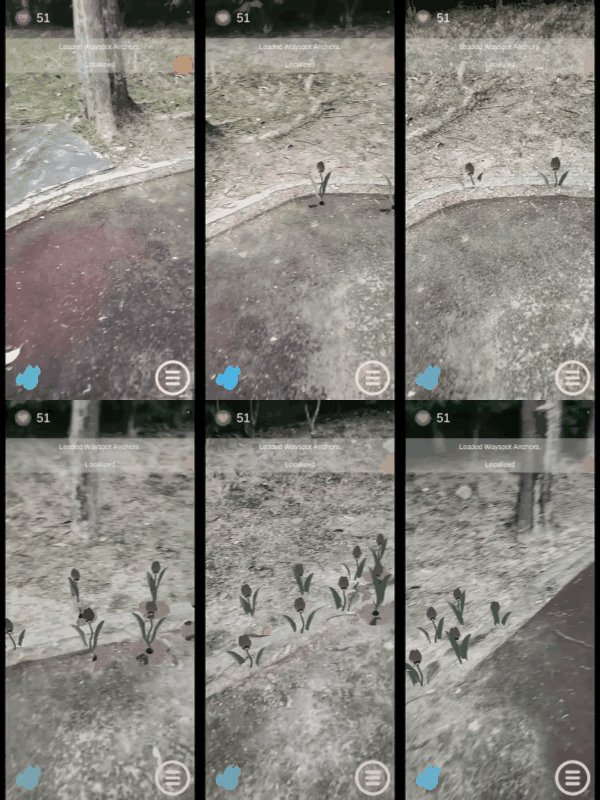
A child can plant several seedlings, return the next day and see them bloom. The experience demonstrates sequence, responsibility and change over time without requiring access to soil or a permanent outdoor plot.
Choosing the Delivery
Does an educational AR experience require an app?
Not always. The right format depends on the lesson length, the complexity of the interaction and how often learners need to return.
The delivery method should reduce friction for the learner while still supporting the educational objective.
Planning the Experience
What should educators consider before building AR?
Start with the learning outcome, not the visual effect. The strongest educational AR experiences make a specific concept easier to understand, practise or remember.
- The learning objective: what the learner should understand or be able to do after the experience.
- The reason for AR: what becomes clearer through scale, depth, location, movement or simulation.
- The learner's action: observing, arranging, answering, practising or completing a meaningful sequence.
- The physical setting: classroom, museum, attraction, workplace, home or another environment with its own constraints.
- The feedback: how learners know what changed, what they understood and what to try next.
- The delivery method: browser-based access for a focused activity or an application for an extended programme.
Virtical combines creative thinking and technology to build educational experiences that remain clear, purposeful and connected to the real world. Explore related applications in AR entertainment and gamified experiences, or discuss an education idea through the project link below.