Why AR for Brands?
What can AR add to a physical campaign?
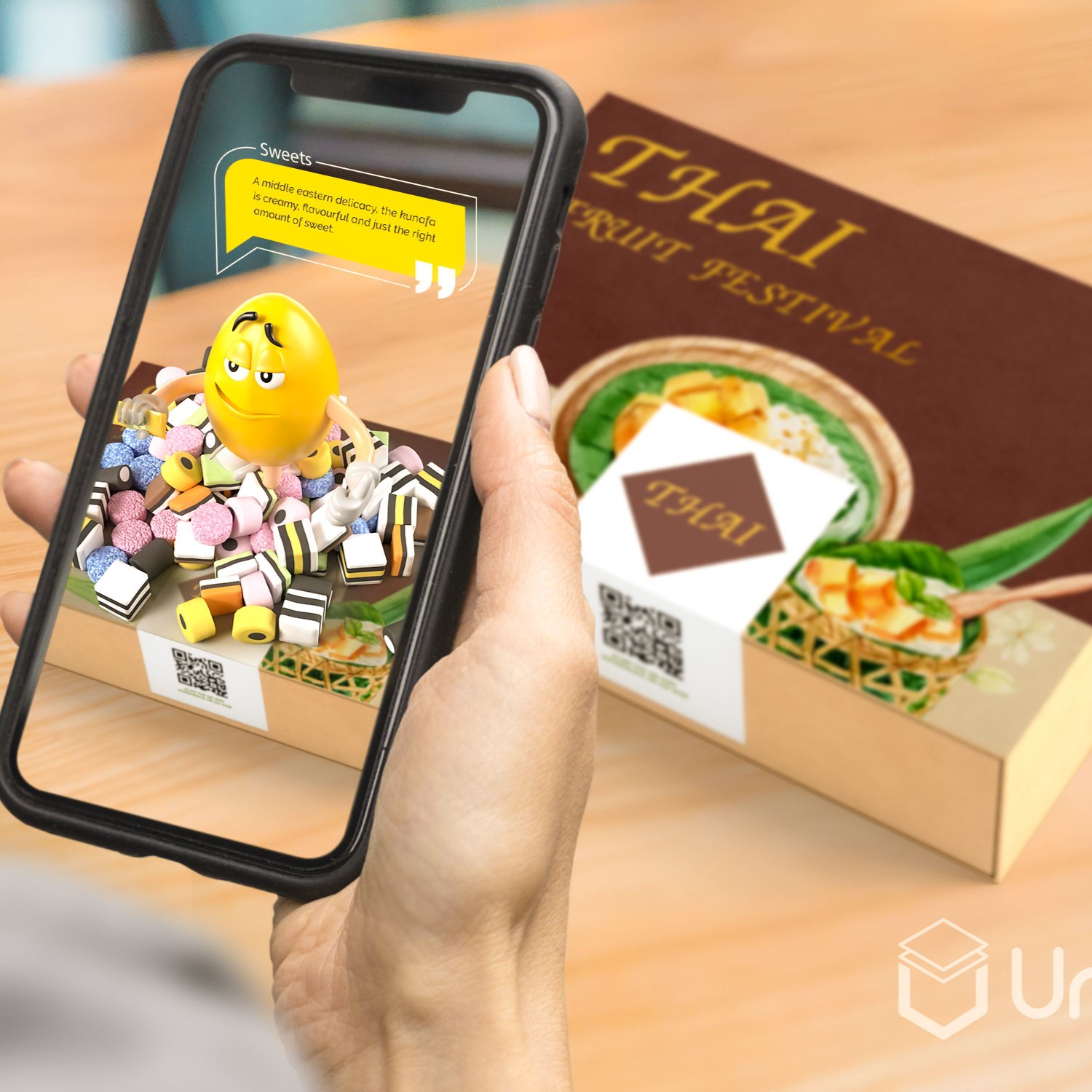
Physical media usually asks people to look. AR can give them something to trigger, inspect, play with or capture. The product or place remains the entry point, while the digital layer turns attention into participation.
The strongest brand experiences are not technology demonstrations. They connect a useful interaction to the campaign idea: revealing a product story, transforming a mural, helping customers understand an offer or making a location worth exploring.
Earn participation
Move beyond passive impressions by giving the audience a clear action and a reason to continue.
Reduce entry friction
Use WebAR where appropriate so a focused experience can begin from a QR code or NFC touchpoint.
Create the impossible
Introduce animated products, giant objects and transforming environments that would be impractical to fabricate.
What AR Makes Possible
Practical uses of AR in brand experiences
Make a product larger than life
AR can turn a recognisable product into an impossible-scale spectacle while preserving the details that make it distinctive. For a bakery activation, Virtical used photogrammetry to create a detailed digital egg tart and place a two-metre version outside the store.
Visitors could approach the product, inspect its texture and take photographs with it. The result connected an eye-catching public moment directly to the thing the brand wanted people to remember.
Turn cards, packaging and printed media into guides
A product package, card, label or printed surface can become the anchor for an interactive story. Digital content may explain a benefit, demonstrate how something works or introduce a character that guides the customer through an offer.
For a credit-card concept, a three-dimensional customer-service character appeared on the physical card and presented its benefits. The interaction gave the static object a voice while keeping the card itself central to the experience.
Bring a mural to life with WebAR
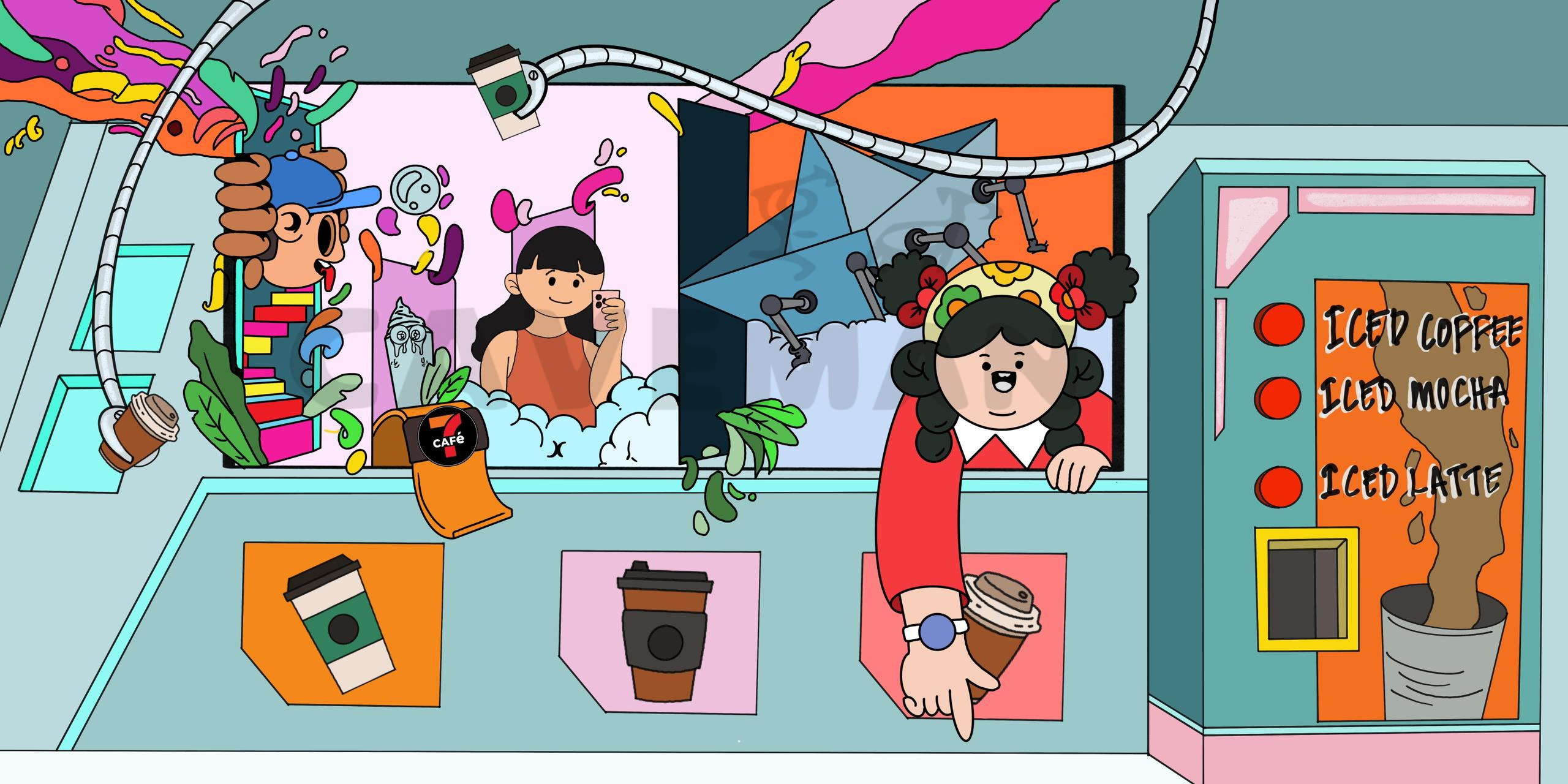
Virtical collaborated with Caveman Murals to extend a painted 7-Eleven kiosk scene into AR. The complete mural acts as the visual anchor; viewed through a phone, characters and activity appear around the artwork to support the 7-Café story.
Because the physical painting and digital layer are designed together, the experience feels connected to the site rather than placed on top as an unrelated effect.
Transform an entire campaign location
Brand AR can also operate at the scale of a place. At a Shell station in Seremban, a gorilla mural expanded into an ancient-temple environment with animals, collectible coins and location-aware digital content.
The station became more than the backdrop for a campaign. Its real surfaces and layout became part of an explorable brand world.
Shell location-based AR transformation
A real petrol-station mural expands into a navigable digital temple scene populated by characters and collectibles.
Use play and discovery to extend campaign engagement
Mini-games, treasure hunts and collectible mechanics can encourage people to spend more time with a product or move through a campaign space. The mechanic should remain simple enough to understand quickly and specific enough to reinforce the brand idea.
For venue-led games and longer missions, see augmented reality for entertainment. For location-aware visitor journeys, explore AR for tourism.
WebAR / No App Required
Can customers open a brand AR experience without installing an app?
For suitable campaign experiences, yes. A QR code, link or NFC touchpoint can open WebAR directly in a compatible mobile browser. This removes the extra commitment of finding and installing a dedicated application for one focused brand moment.
The delivery choice should be made around the audience journey, technical requirements and expected duration—not because one platform is fashionable.
Planning the Experience
What should a brand define before building AR?
Start with the campaign idea and the audience action. A clear experience can be memorable without being technically heavy.
- The campaign objective: awareness, product understanding, participation, footfall, sharing or conversion.
- The physical trigger: product, packaging, print, mural, NFC tag, QR code or location.
- The audience action: reveal, explore, collect, play, learn, photograph or share.
- The entry path: how customers discover the experience and understand what to do within seconds.
- The environment: lighting, available space, connectivity, dwell time and safe movement.
- The content lifecycle: whether the experience is a short campaign, an updateable platform or part of a permanent location.
Virtical combines campaign thinking, visual storytelling and AR technology to create brand experiences that stay connected to the real product and place.